Final 9,000‑Tonne Drop at Able Seaton Port Marks the Closing Chapter of the Brent Charlie Decommissioning
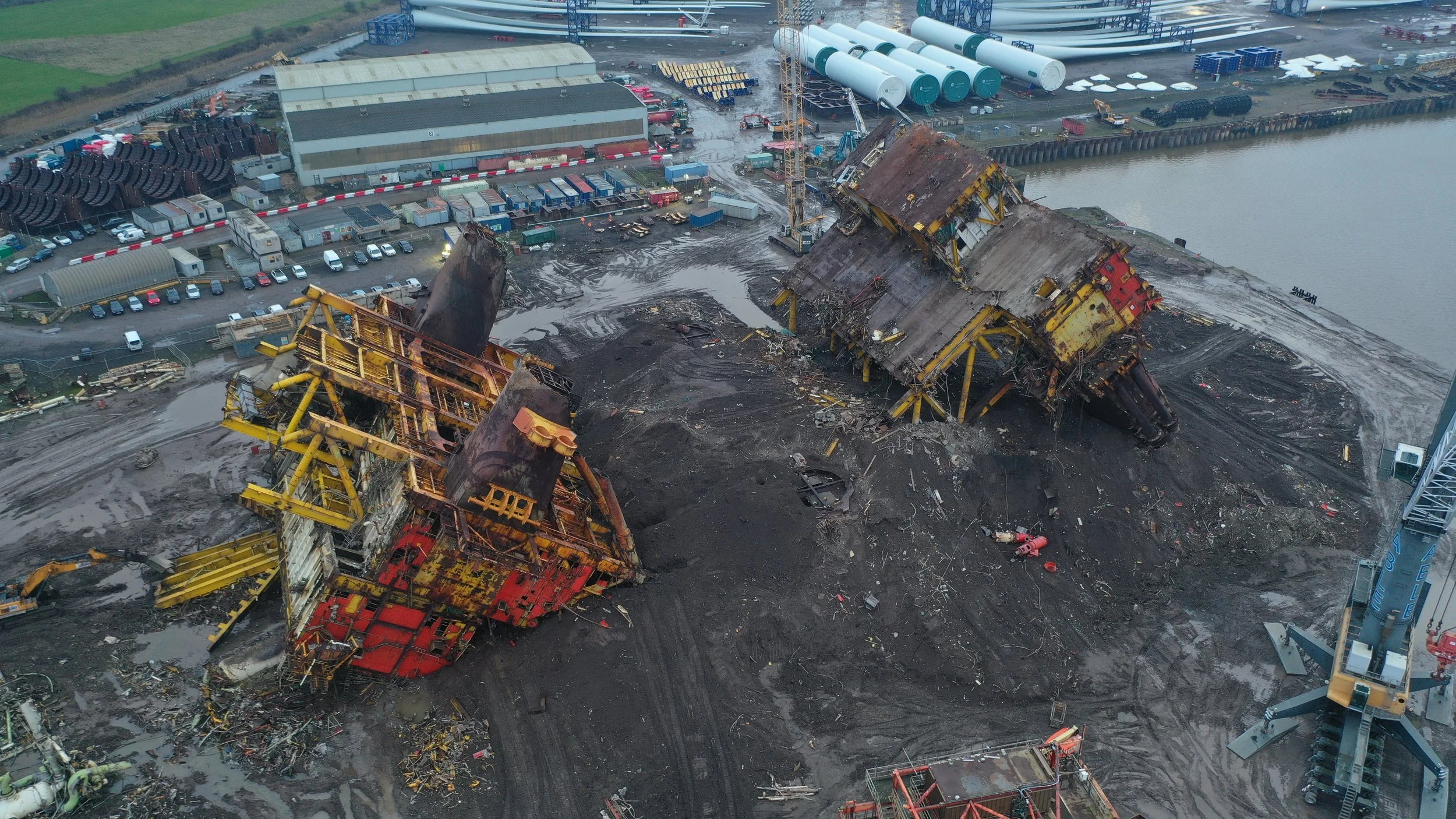
The decommissioning of Shell’s Brent field - one of the most significant and recognisable developments in North Sea history - has reached its defining conclusion at Able Seaton Port (ASP). The final 9,000‑tonne structural section of the Brent Charlie platform has been safely lowered to the quayside, completing a sequence of operations that began offshore with the heaviest single lift ever performed.
A Field That Shaped the North Sea
Discovered in 1971, the Brent field became one of the UK's most productive assets, at one point generating over half a million barrels of oil per day and ultimately producing around three billion barrels of oil equivalent. With reserves fully recovered, the field entered a decommissioning phase requiring advanced engineering and a decade-long sequence of offshore and onshore operations.
From Offshore Heavy Lift to Onshore Precision
In July 2024, Allseas’ Pioneering Spirit removed the 31,000‑tonne Brent Charlie topsides in a single operation - the largest offshore lift ever recorded. The lift completed the removal of all four Brent topsides, with nearly 100,000 tonnes delivered to ABLE at ASP for final dismantling over the course of the project.
Upon arrival, the Charlie topsides were transferred to Allseas’ Iron Lady barge and transported into the ABLE wet dock, before being skidded onto ASP Quay 6 - to be recycled with leading rates of 97–98%.
A 9,000‑Tonne Onshore Drop Engineered and Executed In‑House
The final major structural element - a 9,000‑tonne section, required a meticulously engineered demolition sequence, all carried out by ABLE’s own technical and operational teams.
Key aspects of the operation included:
In‑house demolition design developed by ABLE’s Projects Engineering Manager.
All mechanical cutting and drop execution performed using ABLE-owned cranes, MEWPs, and internal personnel.
A specialist topman team made up of
1 superintendent, 2 topman supervisors, and 6 topmen, each fulfilling critical roles throughout the controlled drop process.The design method required mouthing the four legs of the structure, followed by a planned and sequenced cut of the four central trusses.
The sequence:
First, the inner two trusses were severed,
Followed by a simultaneous final cut of the outer two trusses from man‑riding baskets, enabling a controlled, safe 9,000‑tonne collapse to its prepared landing bed.
This process demonstrates ASP’s capacity not only for heavy industrial handling but also for high‑precision structural engineering, executed fully within ABLE’s own workforce and equipment capabilities.
A Decade of Collaboration and Innovation
The Brent decommissioning programme began in 2013 when Shell awarded Allseas the contract to prepare and remove all four platforms. At the time, Pioneering Spirit was still under construction - its eventual role becoming a milestone in offshore engineering capability.
The onshore dismantling operations at Able Seaton Port have been critical to this multiyear project, enabling safer, more controlled, and more environmentally responsible processing of some of the North Sea’s largest industrial structures.
A Project That Sets a Benchmark
With the final 9,000‑tonne drop complete, the Brent Charlie dismantling phase transitions toward full material recovery, continuing ASP’s strong legacy of achieving recycling rates above 97%.
This last operation is more than the end of a platform - it is the culmination of a pioneering collaboration, a showcase of engineering excellence, and a statement about the capability and skill thriving within ABLE’s workforce.
A proud moment for our team - and for the UK, as ABLE continues to lead in safe, sustainable, world‑class offshore decommissioning with unmatched availability for future decommissioning projects at our unique facilities.